Vinyl vs Laminate Flooring: Which Suits Your Home?


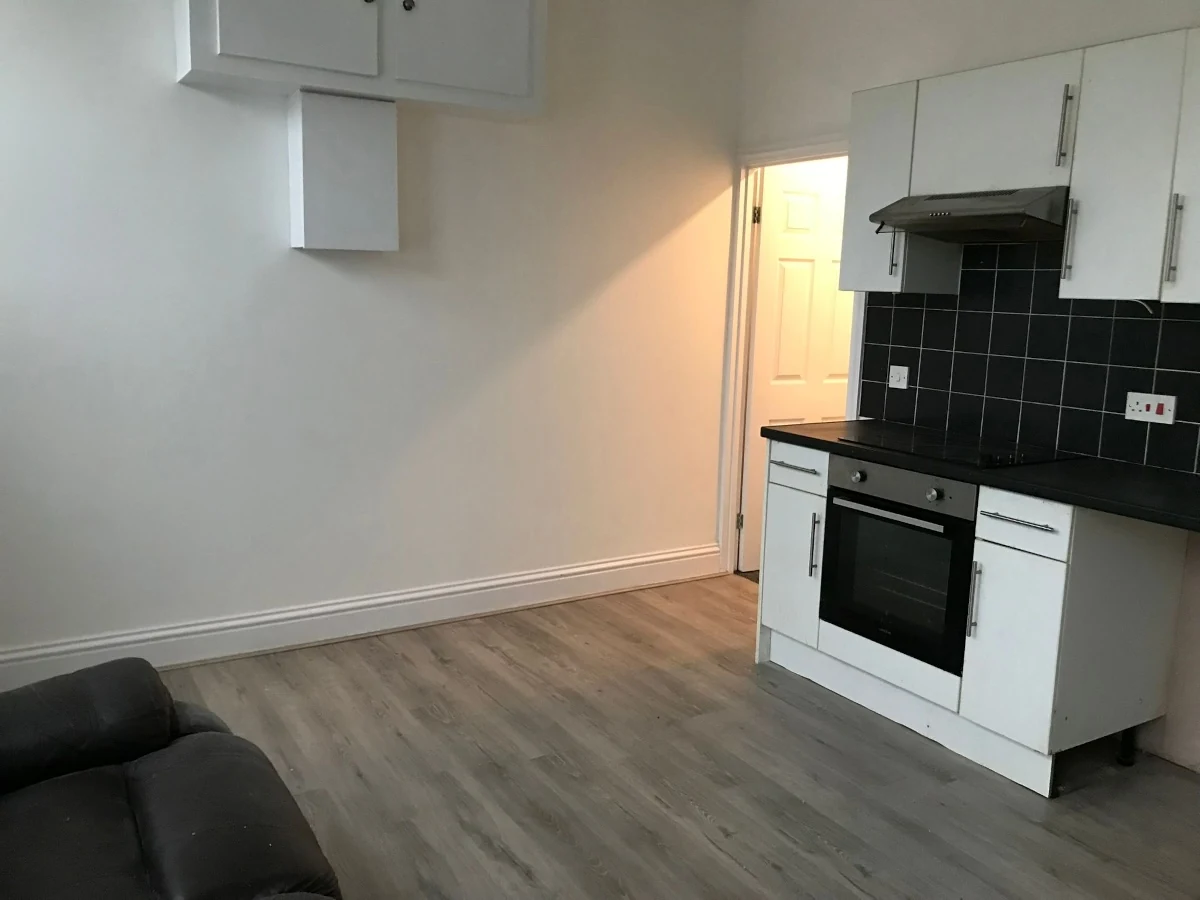
Comparing vinyl and laminate for a Newcastle home? Sheet vinyl, LVT and laminate are built differently, so they cope with water, comfort and repairs differently too.
This guide compares the three materials room by room, then on cost, so you can see which suits yours.
Foxglove Flooring helps you compare floors for your Newcastle home, with free home measuring and advice.
Call 0191 743 2853 to get started today.


Three flooring formats
Vinyl and laminate: the differences that matter
Sheet vinyl, LVT and laminate have different constructions, and each one suits a room for different practical reasons.
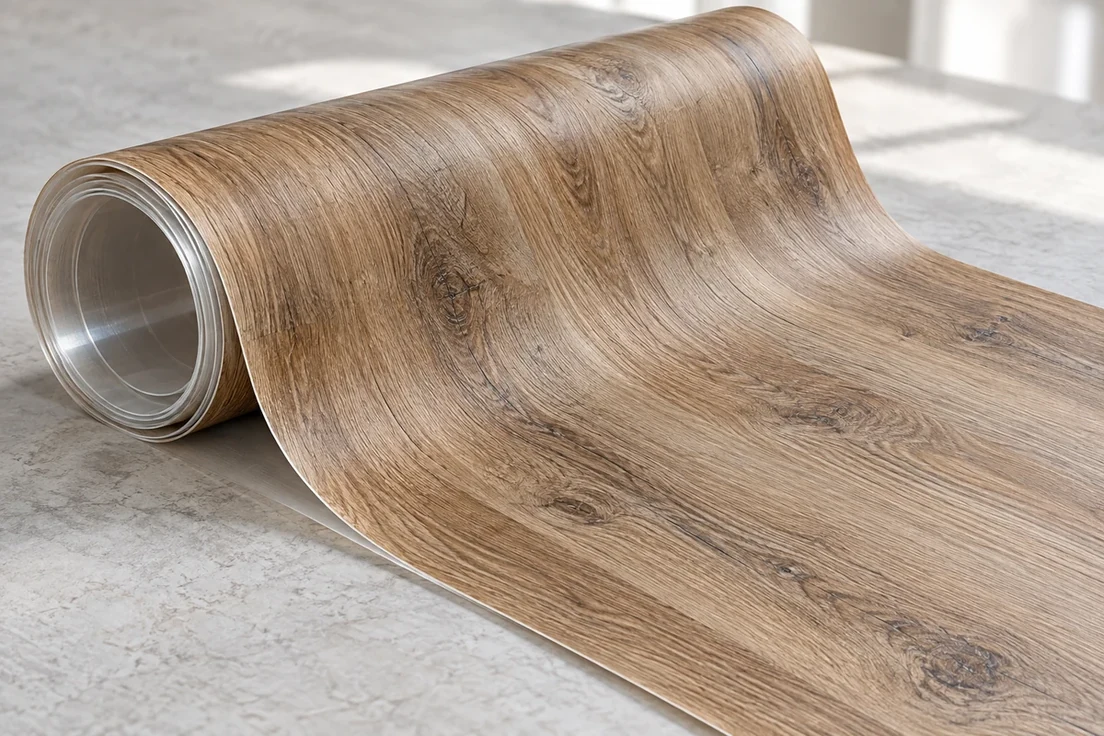
Sheet and Cushioned Vinyl
Sheet and cushioned vinyl comes as a continuous roll. This covers a room with fewer joins than a tiled format. The roll’s width determines where any joins fall.
A cushioned backing gives it a soft, warm feel underfoot, and the surface wipes clean easily day to day.

Luxury Vinyl Tiles and Planks
LVT is PVC-based, like sheet vinyl, but supplied and fitted as individual tiles or planks.
It offers wood, stone or tile looks through separate pieces. Individual tiles or planks also mean a damaged piece can often be replaced on its own.
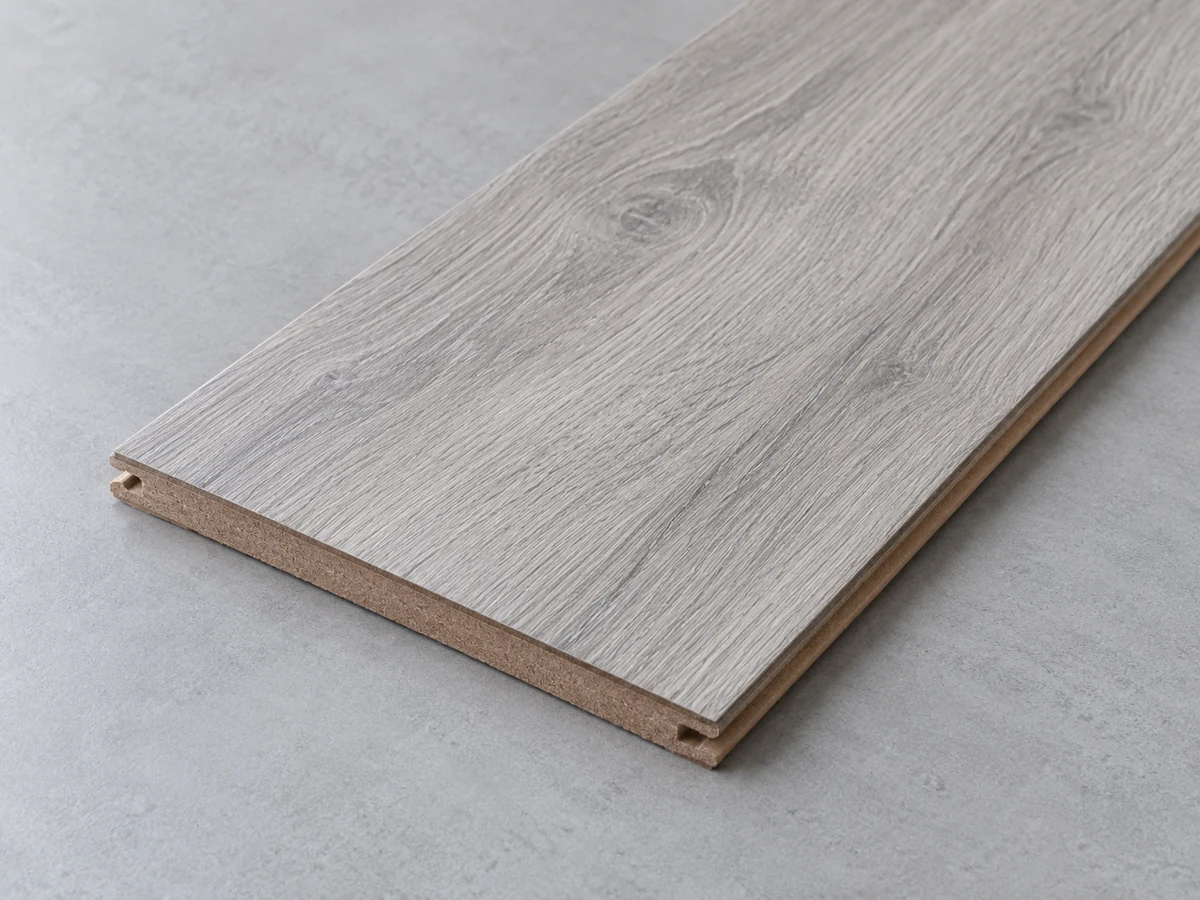
Laminate Flooring
Laminate has a fibreboard core beneath a high-resolution image. Laminate’s protective wear layer resists everyday scratches and scuffs well.
It can look convincingly like wood or stone with a wide range of finishes to match different rooms.
Compare the choice in context
Three everyday rooms: vinyl or laminate?
Comparing vinyl and laminate is easier against a real room than a materials list alone. Here’s how the choice plays out in three common situations.
Spills in a kitchen
A kitchen sees regular splashes from the sink, kettle and dishwasher on top of everyday spills.
Sheet and cushioned vinyl, with its sealed joins, copes well with this kind of daily wear, because water sits on the surface rather than reaching a vulnerable core. A water-resistant laminate can also suit a kitchen, provided spills are wiped up reasonably promptly rather than left to sit.
The team can match a product and fitting method to how wet the room actually gets, and advise on the right joins and edging for a kitchen specifically.
Comfort in a bedroom
A bedroom floor is mostly about how it feels underfoot first thing in the morning.
Cushioned vinyl’s soft backing gives a warmer, gentler feel than a rigid board, which many people prefer bare-footed in a bedroom. Laminate feels firmer underfoot by comparison.
If noise between floors matters to you, a suitable acoustic underlay can help reduce the impact sound that reaches the room below. The room’s whole floor and ceiling construction plays a part too, and the team can recommend a build-up suited to your floor.
A rental changeover
Between tenancies, the floor needs to go back down and cope with the next tenant’s everyday wear.
LVT’s individual tiles or planks have an advantage here: a single worn or damaged piece can often be swapped out between tenancies, rather than relaying the whole room, provided the fitting system allows it. Sheet vinyl and laminate are both straightforward to keep in good order between tenancies with routine care.
The team can agree a fitting date against your changeover window at the measure visit.
Sheet vinyl, LVT and laminate compared
Here's how sheet/cushioned vinyl, LVT and laminate generally compare on water, feel, heating and repairs.
| Feature | Sheet/Cushioned Vinyl | LVT | Laminate |
|---|---|---|---|
| Water exposure | Resists everyday splashes well; a shower or wet room needs a sealed wet-room system | Resists everyday splashes well; a wet room still needs a sealed system | Suits splashes if wiped promptly; standing water harms its fibreboard core |
| Underfoot feel | Softer, with a cushioned backing | Firmer, closer to a rigid floor | Firm underfoot, without a cushioned backing |
| Underfloor heating | A thin glued sheet transfers heat readily | Polyflor's Camaro PUR range, for example, is rated up to 27°C | The combined resistance of board and underlay affects how well heat comes through |
| Minor repairs | A damaged area can often be cut out and patched; the join may remain visible | An individual damaged tile or plank can often be replaced on its own | Light marks can sometimes be treated; a board with damage to its printed layer usually needs replacing |
Room and moisture
Which floor suits the room and its water exposure?
Water exposure is where vinyl and laminate genuinely part company. It helps to separate three situations:
- Everyday spills, like a dropped glass or a splash from the kettle, should be wiped up reasonably promptly on either material.
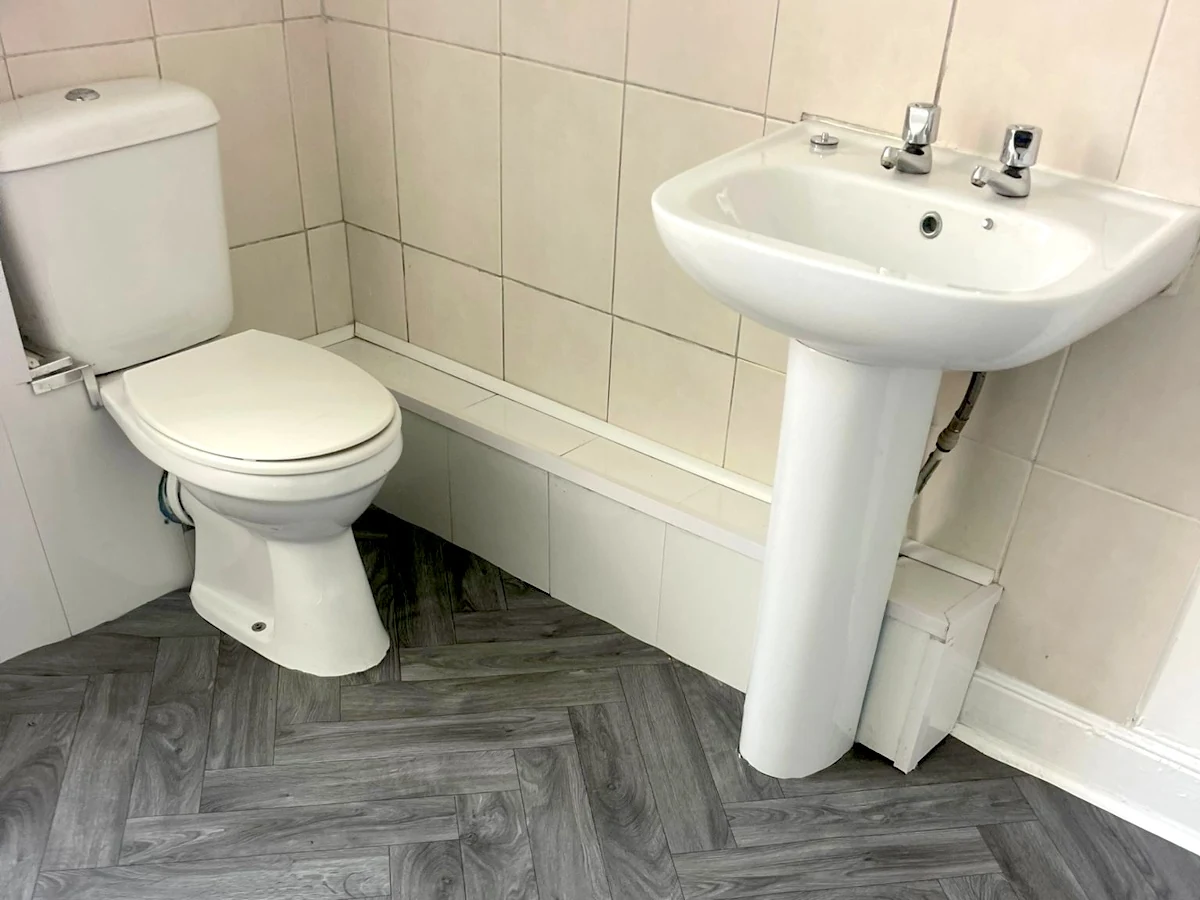
- A bathroom with occasional splashing is different. Vinyl and LVT’s sealed surface copes well here. Some laminate ranges are built and finished for a bathroom; others aren’t rated for it.
- A shower area or wet room needs more than an everyday water-resistant floor. It needs a sealed system with joins, a perimeter and drainage details designed for standing water, which the fitter can discuss and arrange.
Laminate’s fibreboard core is the one place standing water causes lasting damage, whereas vinyl and LVT’s PVC surface tolerates it far better.
Comfort in daily use
How do feel, noise and everyday wear compare?

Underfoot feel is one of the clearest differences between the two materials. Cushioned vinyl’s soft backing gives a warmer, more forgiving feel than a rigid floor, while LVT and laminate are both firmer, closer to walking on a hard surface.
Impact noise between floors is a separate question from softness, and it depends on the whole floor and ceiling construction, not the surface material on its own. A suitable acoustic underlay can help reduce the sound passing to the room below. The team can recommend a build-up suited to an upstairs room.
Laminate’s protective wear layer resists everyday scratches and scuffs well, and vinyl’s surface wipes clean and copes well with scuffs too, so both hold up to normal daily use. Deeper damage behaves differently on each, and the care section below covers how repairs work for each material.
Base, height and heating
What preparation and heating checks matter?
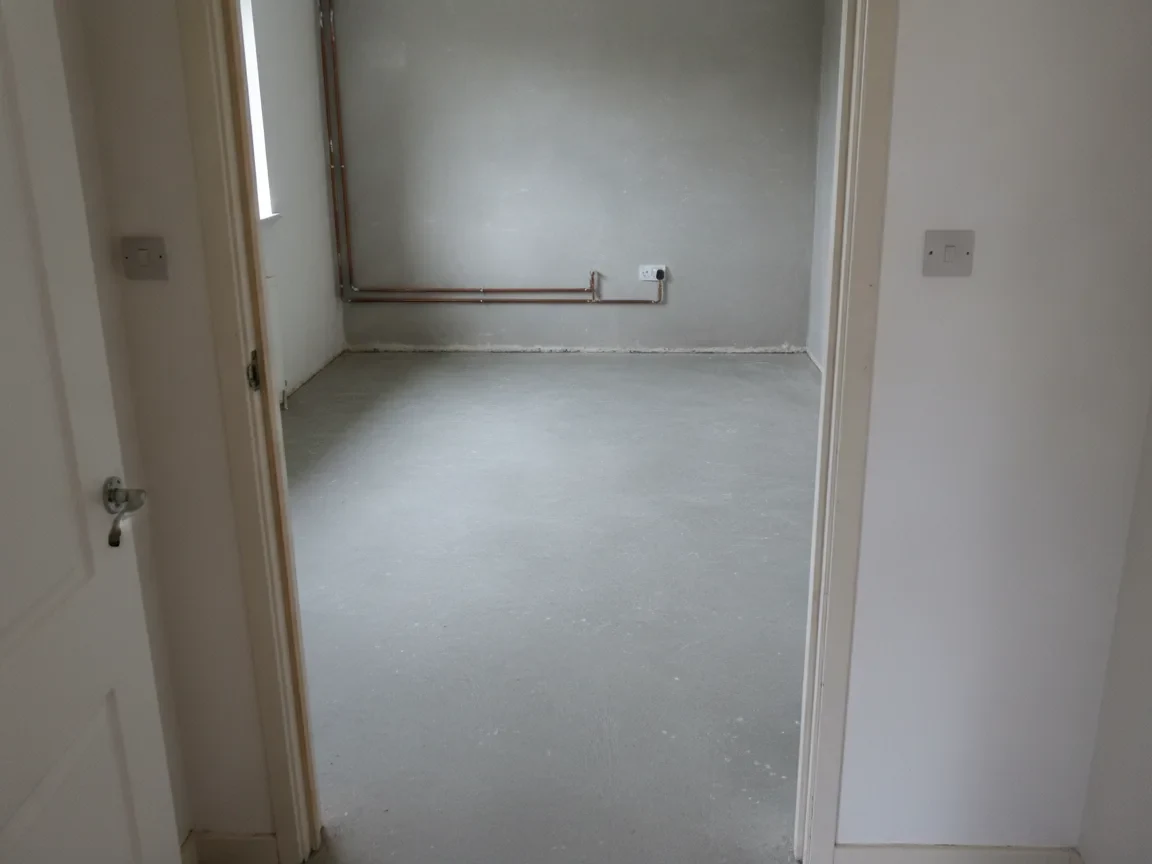
What’s underneath a new floor matters as much as the floor itself. A sound, level base needs less work than an uneven subfloor, and the fitter assesses what’s needed, from lifting old covering to smoothing boards, before vinyl or laminate goes down.
Both vinyl and laminate can work with underfloor heating, but the floor’s whole build-up affects how well the heat comes through. A thin, glued vinyl sheet passes heat through readily, while a floating laminate board sits on an underlay that adds some insulation and slows the transfer.
The fitter matches the product, underlay and heating system together, and checks the manufacturer’s temperature limit as part of that.
Base condition, height build-up and edge details need checking together, so the floor you choose fits the room’s heating setup.
The whole fitted job
What changes the total fitted cost?
A price per square metre doesn’t tell you the full cost of either floor.
The flooring itself varies in price between vinyl and laminate products, and between ranges within each, but preparing the existing floor, fitting it and any uplift of what’s there now all affect the total.
Foxglove Flooring’s vinyl quote covers the work your room actually needs:
- Furniture moving
- Floor preparation, including lifting old covering or smoothing an uneven base
- Fitting, joins and finishing checks
- Uplift and disposal, when needed
These form part of the quoted job and price, so you’re comparing a complete fitted cost rather than a material price alone.
Care over time
How do care and damage repairs compare?
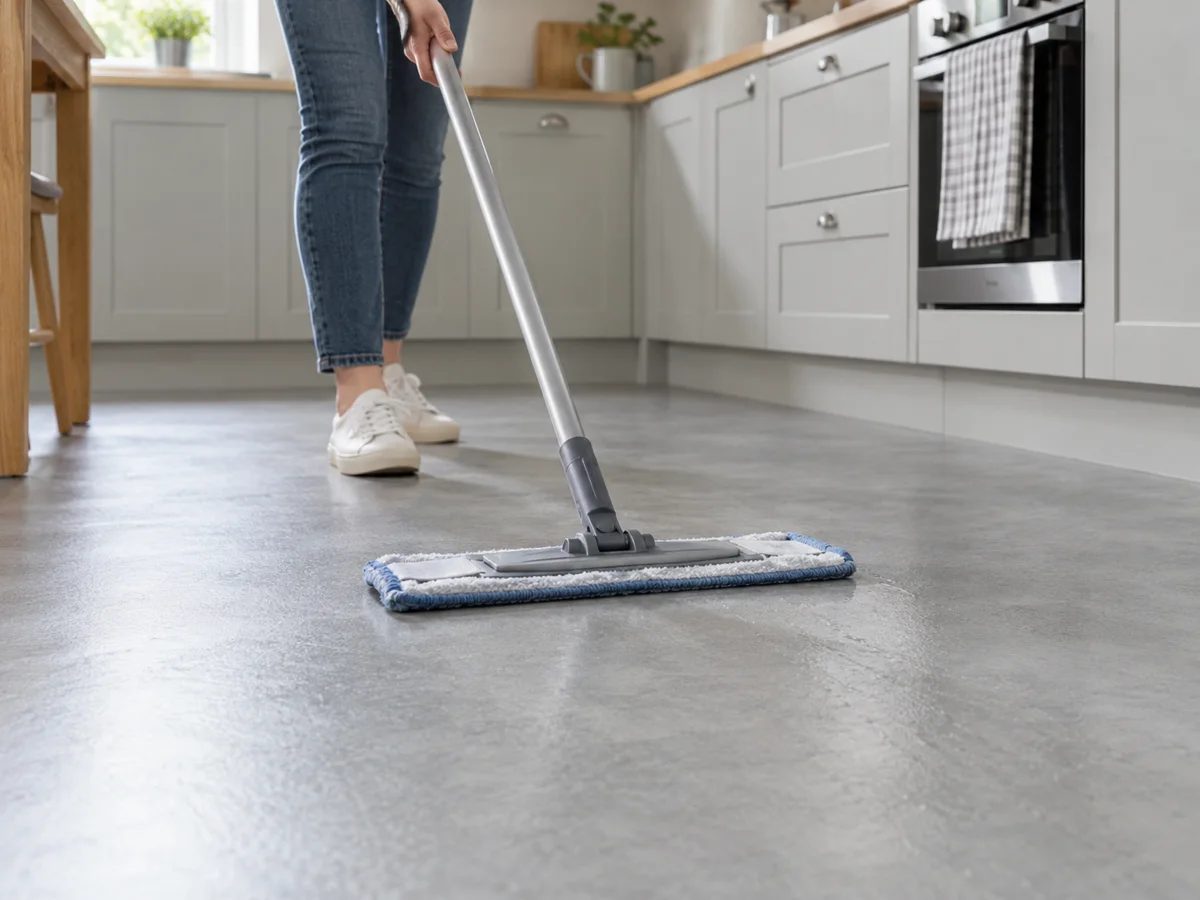
Routine care looks similar for both floors:
- Sweep or vacuum regularly to keep grit off the surface before it causes scuffing.
- Wipe up spills promptly so they don’t sit on joins or edges.
- Use felt pads under furniture legs to limit scuffing and pressure marks.
- Follow the product’s own cleaning guidance, since not every vinyl or laminate finish takes the same treatment.
Damage repair is where the two materials genuinely differ, and which repair applies depends on how deep the damage goes.
On laminate, a light surface chip or scratch can sometimes be treated with a colour-matched repair kit. Where the damage reaches the printed layer, the board generally needs replacing, since laminate’s printed surface can’t be refinished like timber.
On vinyl, light scuffs can sometimes be cleaned off the surface.
Deeper cuts or tears need a fitter’s assessment: a damaged section of sheet vinyl can often be cut out and patched, though the join may remain visible, while a glued-down LVT tile or plank can usually have just that piece lifted and replaced on its own.
Keeping spare tiles, planks or an offcut of sheet from the original fitting makes a later repair quicker and gives the closest colour match.
Local fitting help
Choosing flooring for your Newcastle home
Foxglove Flooring supplies and fits sheet and cushioned vinyl, LVT, and laminate flooring. The team covers Newcastle upon Tyne and Tyne and Wear.
A free home visit lets the fitter measure the room, check the existing base and talk through your options. Samples can be brought when requested in advance, so you can compare finishes at home before deciding.
The product, preparation and scope are agreed as one quote before work starts. This lets you compare the whole job, rather than a material on its own.
See the full vinyl flooring or laminate flooring service pages for the complete process and coverage.
Get My Free Quote
Fill in the form below to arrange a free home measure.
Get My Free Quote
Fill in the form below to arrange a free home measure.
Foxglove Flooring puts you in touch with our independent local flooring partner. Your enquiry goes to our partner, who provides the quote and carries out the work.